Pasta e Piselli (pasta and peas)
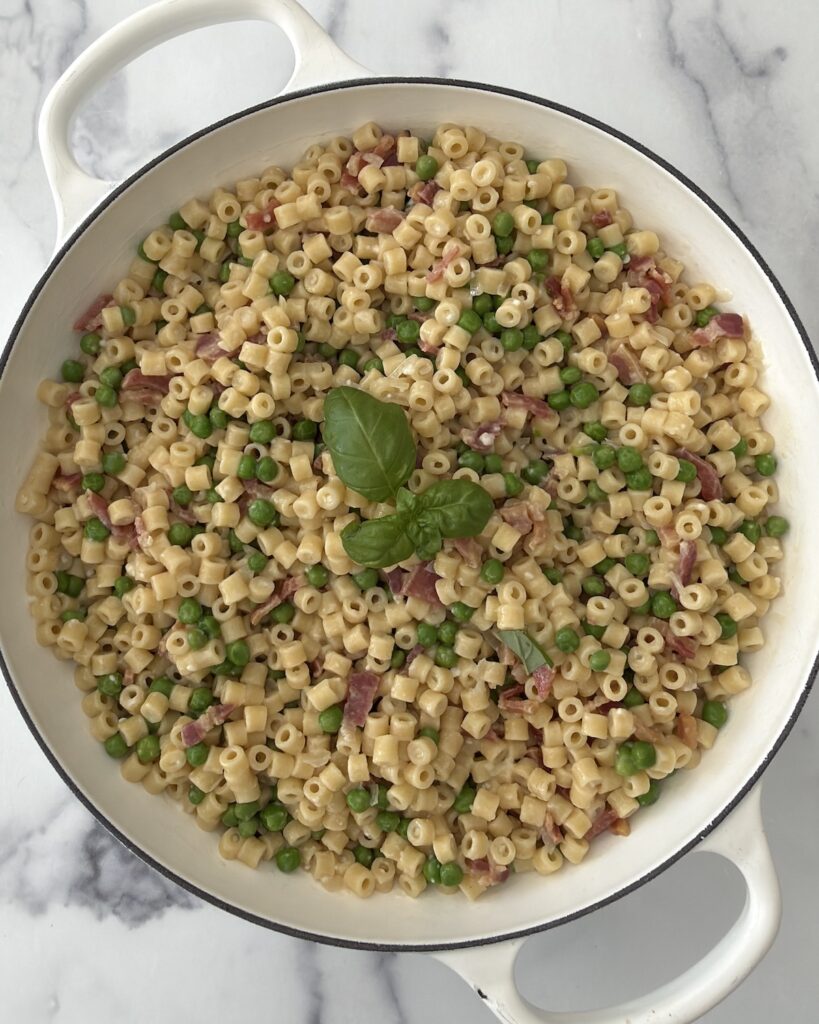
This Pasta e Piselli, also known as pasta with peas, is a traditional Italian one-skillet pasta recipe that’s the definition of comfort. Made with sweet peas and lots of cheese, it comes together in just 30 minutes with ingredients from your fridge and pantry.
Pasta Piselli was one of those dishes that my grandmother always had on the stove in the springtime. Whether it was warm and ready for lunch or tucked into the fridge to reheat when company came over, pasta with peas was a staple in her kitchen. This tried-and-true recipe was passed down to mom and she made it for us growing up too. Now it’s something I turn to when I want a meal that feels nostalgic but still packs incredible flavor.
This version of pasta piselli adds pancetta for a salty, savory twist—while keeping all the simplicity of the original dish. Made in one skillet and using only 6 ingredients, it’s the kind of meal I make quickly for my kids on a busy weeknight or serve alongside roasted chicken, grilled fish, or a beautiful Sunday dinner with family on the weekend.
Review from Social Media: “This sounds perfect for cozy nights, simple but super tasty. Can’t wait to try it!” – Zeel
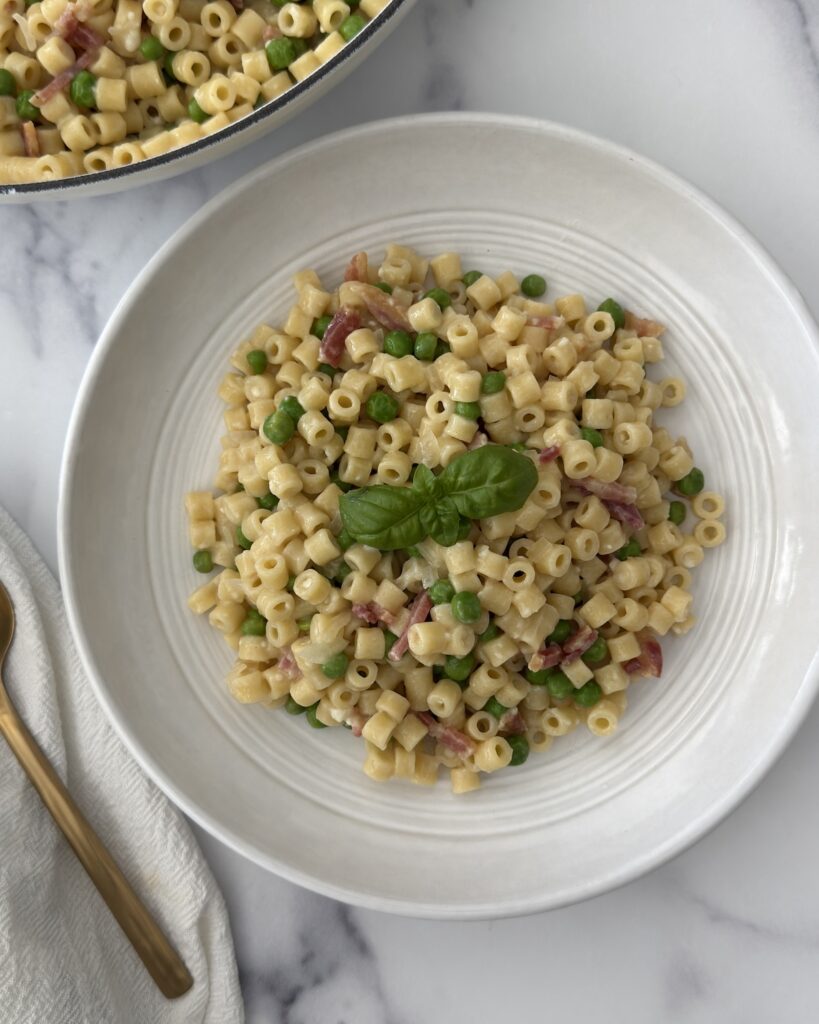
Table of Contents
Why You’ll Love This Recipe
- Ready in 30 minutes. This is your new go-to weeknight pasta—quick to make, easy to love, and satisfying every time.
- Simple ingredients with big flavor. Salty pancetta, sweet peas, and starchy pasta water come together create a rich and creamy sauce with no real cream needed!
- Pantry-friendly ingredients. You likely have everything you need already: dried pasta, frozen peas, olive oil, and some cheese.
- Perfect all year-round. Light enough for spring and summer, but still cozy enough for colder months when you want comfort in a bowl.
- Finished in one pan. Cooking the pasta separately keeps it perfectly al dente, while the final toss in the skillet creates the creamy sauce that coats every bite.
What Is Pasta e Piselli (pasta with peas)?
Pasta e Piselli (pronounced PAHS-tah eh pee-ZELL-ee) translates to “pasta and peas” in Italian. Traditionally from Naples and southern Italy, it’s a humble dish typically made without meat—just peas, onion, and short pasta simmered together to create a creamy, starchy sauce.
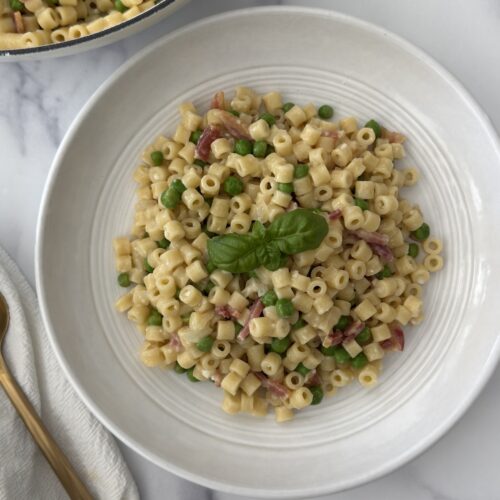
This version adds crispy pancetta and finishes the dish with Pecorino Romano, giving it a deeper, more savory flavor while keeping that soft, comforting texture. The sauce should lightly coat the noodles—not soupy, not dry—with tender peas in every bite.
Jenn’s Tip:
The secret to an authentic creamy Italian pasta sauce is using starchy pasta water to create the sauce. By slowly adding it along with the grated cheese, it naturally creates a creamy sauce with no heavy cream needed. The starch from the pasta water helps to bind the cheese to the noodles for a silky, restaurant-worthy finish.
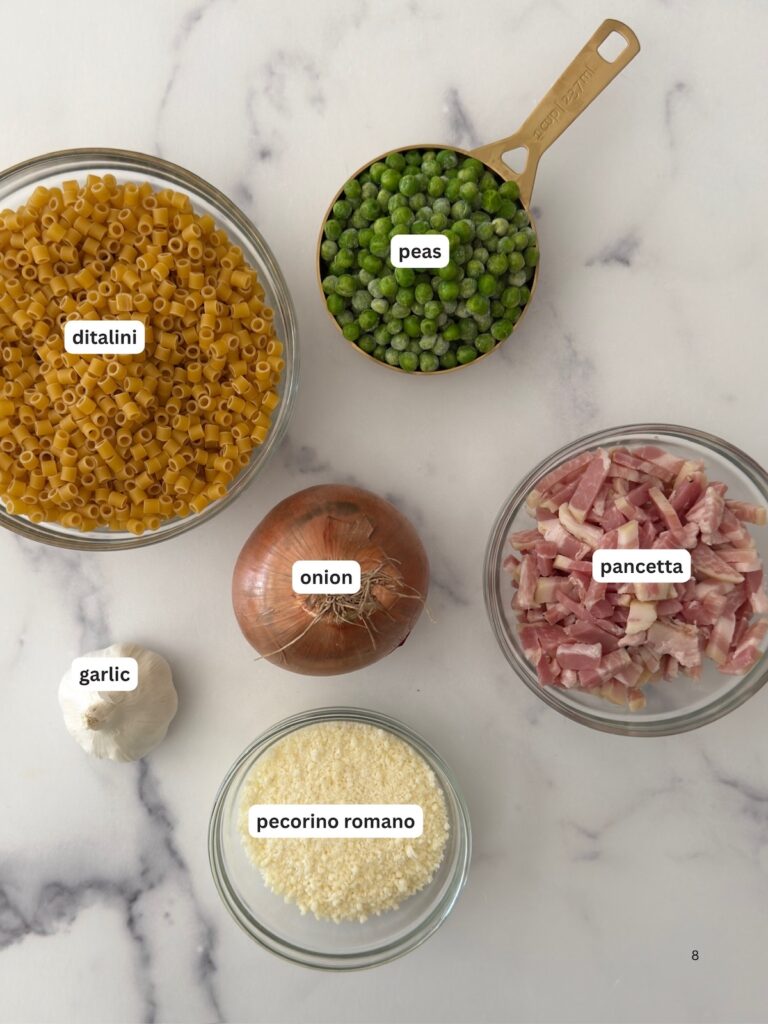
Ingredients
- Short pasta – Ditalini, small shells, or orecchiette all work well.
- Pancetta, diced – Adds salty depth and a crisp texture.
- Yellow onion, finely chopped – A mellow aromatic base.
- Garlic cloves, minced – Adds gentle, aromatic flavor.
- Frozen peas – Sweet and creamy; fresh peas work too when in season.
- Salt (adjust to taste) – Start light; pancetta and cheese add more saltiness.
- Reserved pasta water – Helps emulsify the sauce and gives it body.
- Freshly grated Pecorino Romano – Sharp, salty, and bold.
- Black pepper, to taste – Freshly ground works best.
How to Make Pasta e Piselli
- Bring a large pot of salted water to a boil. Cook the ditalini until al dente. Reserve at least 2 cups of pasta water, then drain.
- In a large skillet over medium-low heat, add the pancetta. Cook for 10–12 minutes, stirring occasionally, until the fat has rendered and the pancetta is golden and crisp. Using a slotted spoon, transfer the pancetta to a plate, leaving the fat in the pan.
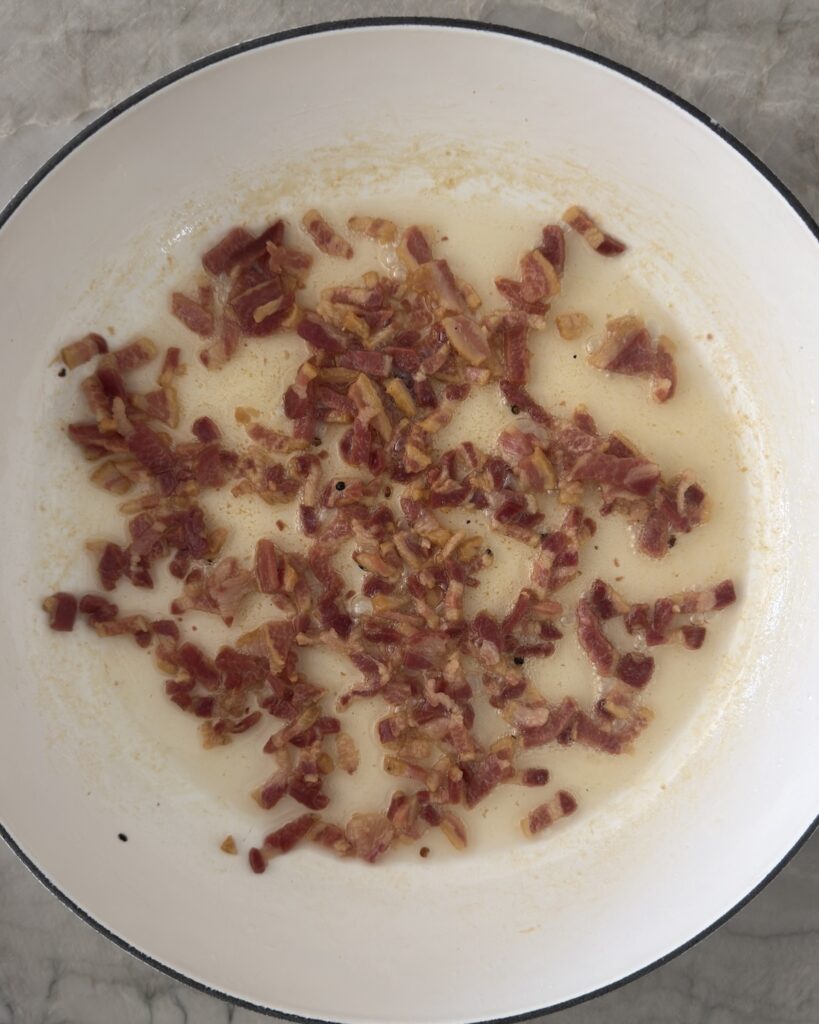
- Reduce the heat to medium-low. Add the onion along with a small pinch of salt and cook for 2–3 minutes, until softened and translucent. Stir in the garlic and cook for 30 seconds.
- Add the peas and season lightly with salt and black pepper. Stir for 1–2 minutes, then add ¾ cup to 1 cup of the reserved pasta water.
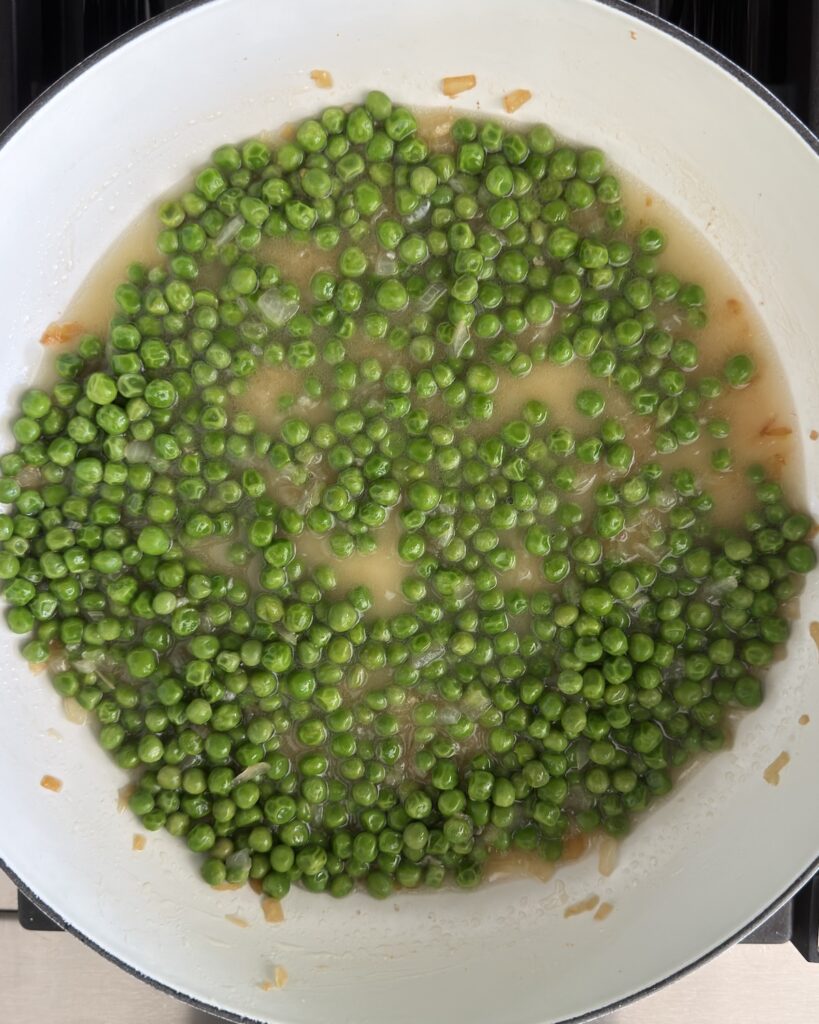
- Add the drained pasta to the skillet and toss well, allowing the pasta to absorb the liquid and become creamy. Add more pasta water as needed, a little at a time, until the sauce lightly coats the pasta.
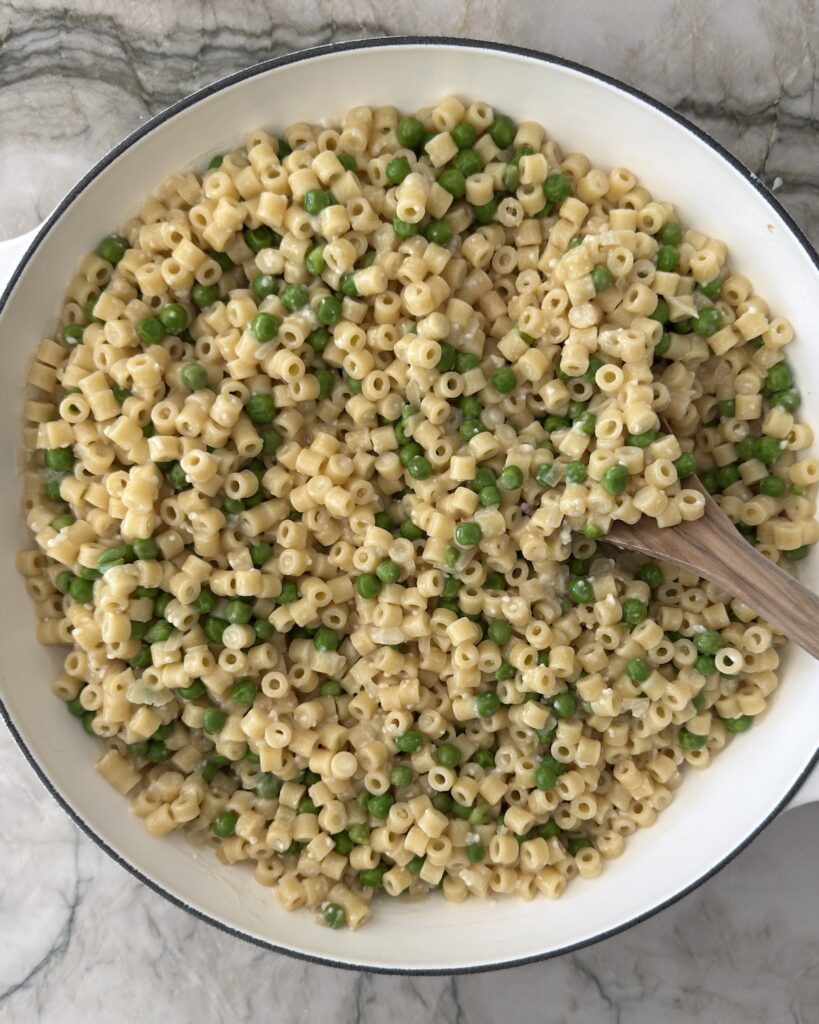
- Return the pancetta to the skillet and toss to combine.
- Turn the heat off completely. Gradually add the Pecorino Romano, tossing continuously until the cheese melts into the pasta and creates a creamy sauce. Add more pasta water if needed to loosen the consistency.
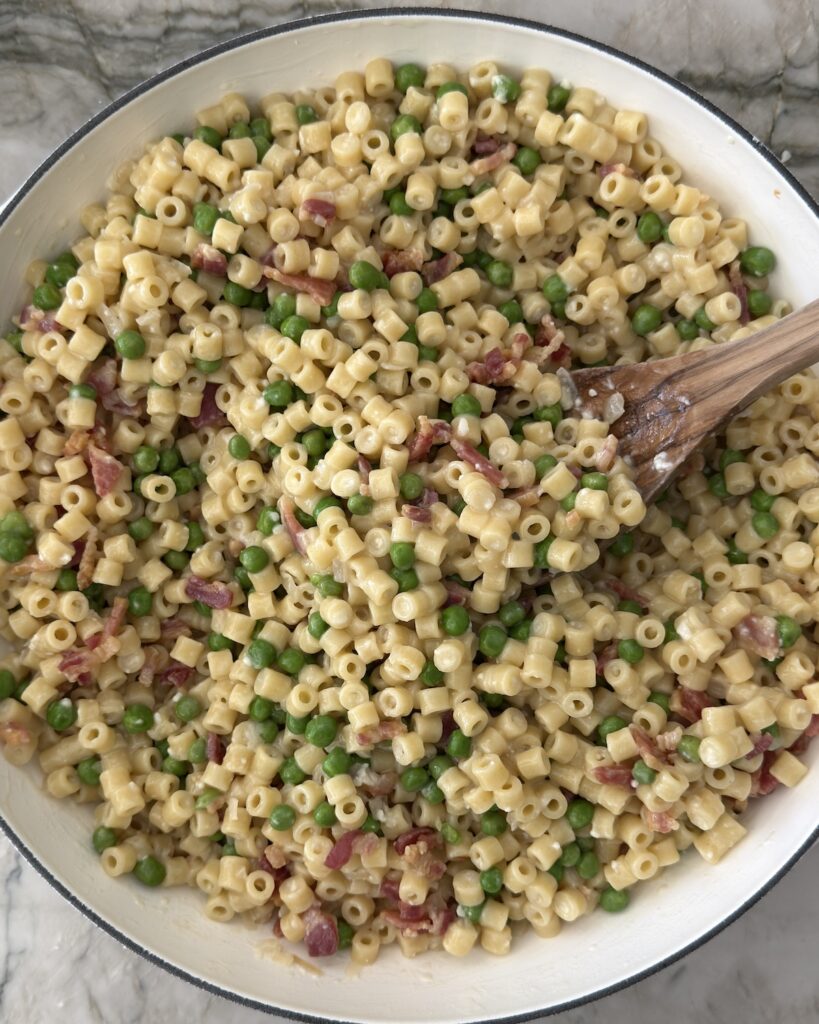
- Finish with freshly ground black pepper and serve immediately.
Substitutions and Variations
- Swap pancetta for bacon. If you don’t have pancetta, diced bacon works just fine. It adds a smoky, salty flavor and crisps up nicely in the pan.
- Make pasta piselli meatless. Skip the pancetta and start with olive oil, onions, and garlic—just like my grandmother did. It’s still cozy and full of flavor.
- Add baby spinach. Toss in a handful at the end and let it wilt into the sauce. It’s an easy way to add more greens without changing the flavor.
- Use fresh peas in spring. If you can find them, use fresh peas—they add a delicate sweetness and a pop of bright green that’s perfect for warmer months.
- Try a different pasta shape. Ditalini is traditional, but small shells, orecchiette, or even elbow macaroni will work well and hold the sauce nicely.
Expert Tips
- Don’t skip the reserved pasta water. It helps emulsify and thicken the sauce naturally.
- Mash a few peas. This trick adds creaminess without needing cream.
- Avoid overcooking the peas. Add them last so they stay tender, not mushy.
- Grate your own cheese. Pre-grated cheese won’t melt the same way and could make the sauce gritty.
- Turn the heat off before adding the cheese. This helps the Pecorino melt smoothly into the pasta instead of clumping.
Storage
Pasta with peas is best enjoyed fresh, but leftovers keep well for up to 4 days in the fridge. Store in an airtight container, and reheat gently with a splash of water or broth to bring back the creaminess.
To freeze, let pasta e piselli cool completely and transfer to freezer-safe containers. Freeze for up to 2 months. It may lose a bit of its texture when thawed, but you can revive it with a little extra cheese and butter. It’s a great way to keep comfort food ready to go.
FAQs
Ditalini is the most traditional, but mezzi rigatoni, small shells, or orecchiette work just as well.
Yes, you can—but keep in mind that “piselli” means peas in Italian, so peas are the star of this dish. That said, feel free to experiment with seasonal vegetables like chopped zucchini, asparagus, or corn if you’re looking to switch it up.
It should be creamy and slightly loose—not too thick, not watery. Add a bit of pasta water to loosen it up if needed.
Mash some peas into the sauce, stir in extra cheese, or add a small pat of butter right before serving.
Pasta e Piselli (Pasta with Peas)
Equipment
- 1 Large Pot for boiling pasta
- 1 large skillet for sautéing and tossing pasta together
Ingredients
- 12 ounces Ditalini
- 1/2 cup finely chopped yellow onion
- 2 Garlic cloves, minced
- 8 ounces Pancetta, diced
- 1 1/2 cups Frozen peas
- 1 cup Freshly grated Pecorino Romano
- Salt & pepper to taste
Instructions
- Bring a large pot of salted water to a boil. Cook the ditalini until al dente. Reserve at least 2 cups of pasta water, then drain.
- In a large skillet over medium-low heat, add the pancetta. Cook for 10–12 minutes, stirring occasionally, until the fat has rendered and the pancetta is golden and crisp. Using a slotted spoon, transfer the pancetta to a plate, leaving the fat in the pan.
- Reduce the heat to medium-low. Add the onion along with a small pinch of salt and cook for 2–3 minutes, until softened and translucent. Stir in the garlic and cook for 30 seconds.
- Add the peas and season lightly with salt and freshly ground black pepper. Stir for 1–2 minutes, then add 3/4 to 1 cup of the reserved pasta water.
- Add the drained pasta to the skillet and toss well, allowing the pasta to absorb the liquid and become creamy. Add more pasta water as needed, a little at a time, until the sauce lightly coats the pasta.
- Return the pancetta to the skillet and toss to combine.
- Turn the heat off completely. Gradually add the Pecorino Romano, tossing continuously until the cheese melts into the pasta and creates a creamy sauce. Add more pasta water if needed to loosen the consistency.
- Finish with freshly ground black pepper and serve immediately.
Notes
- Don’t skip the reserved pasta water. It helps emulsify and thicken the sauce naturally.
- Mash a few peas. This trick adds creaminess without needing cream.
- Avoid overcooking the peas. Add them last so they stay tender, not mushy.
- Grate your own cheese. Pre-grated cheese won’t melt the same way and could make the sauce gritty.
- Turn off the heat before adding the cheese. This helps the Pecorino melt smoothly into the pasta instead of clumping.
- Pasta e Piselli is best enjoyed fresh, but leftovers keep well for up to 4 days in the fridge. Store in an airtight container, and reheat gently with a splash of water or broth to bring back the creaminess.
- To freeze, let it cool completely and transfer to freezer-safe containers. It may lose a bit of its texture when thawed, but you can revive it with a little extra cheese and butter. It’s a great way to keep comfort food ready to go.