Pea Risotto
This delicious Pea Risotto is the perfect balance of creamy comfort and bright flavor, and a fresh spring version of the creamy arborio rice dish. It’s a restaurant-quality main that will impress the whole family.
Risotto is one of those Italian dishes that’s simply unmatched in texture and flavor. It’s all in the art of cooking it, and this Pea Risotto does not disappoint. Creamy arborio rice meets sweet peas for a fresh take on the classic dish. Not only is this recipe is one of my favorites, but it’s such a beautiful way to highlight seasonal produce. And you’re in luck! I’m giving you all my tips to make it perfectly tender.
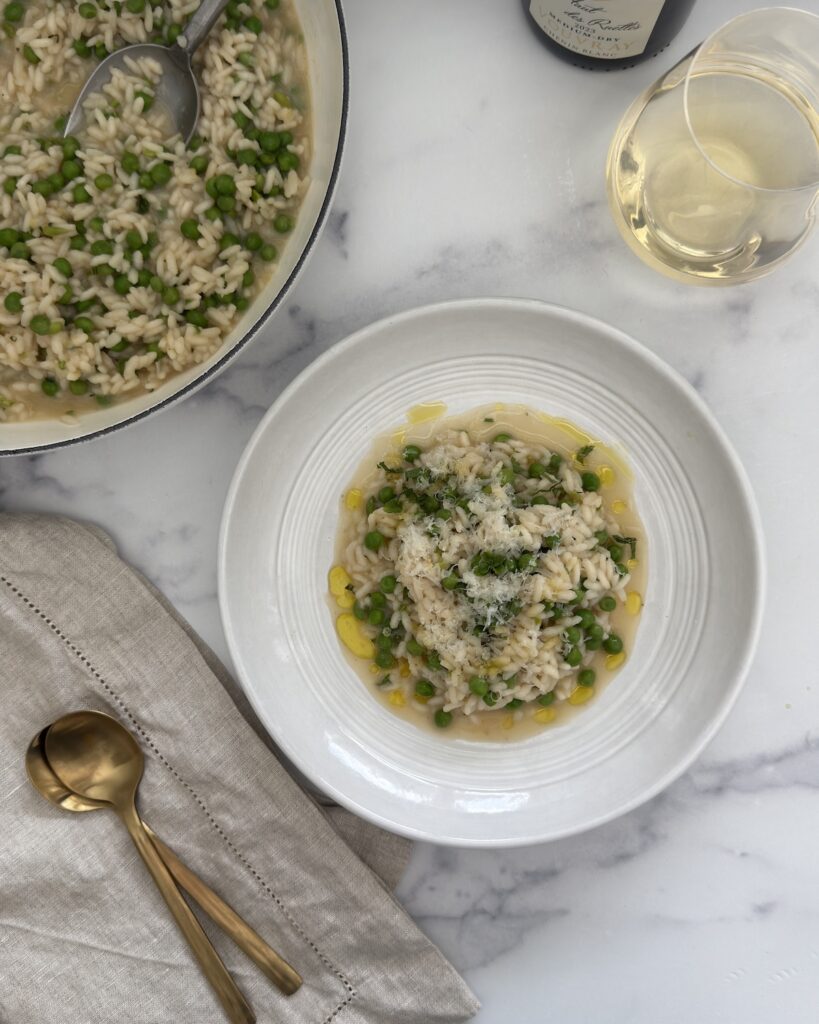
Arborio rice is slowly cooked with warm broth until silky and tender, then finished with fresh peas and a generous shower of Parmesan for a savory and satisfying meal. Impressive and surprisingly easy to make, this Pea Risotto is elegant enough for entertaining, yet simple enough for a cozy weeknight dinner with family.
If you like this decadent one pot dish, try these other hearty favorites. This Pumpkin Risotto is another seasonal spin on the traditional, and we love this cozy Lemon Chicken Orzo Pasta.
Table of Contents
Why You’ll Love This Recipe
- Fresh, vibrant flavor from sweet peas: Peas are naturally sweet and fresh in flavor, and have an earthy, “green” taste that pairs nicely with rich cheese and butter.
- Perfect side or main dish: This is hearty enough to be a vegetarian main, or a side dish served with a simple protein.
- Great for spring gatherings: Nothing says “spring has sprung” more than fresh peas. This recipe is the perfect way to celebrate the season.
What Is Risotto?
Risotto is a rich and creamy traditional Northern Italian rice dish made by slowly adding warm broth, wine, onion, butter, and Parmesan cheese to extra starchy, short-grain rice – usually Arborio or Carnaroli.
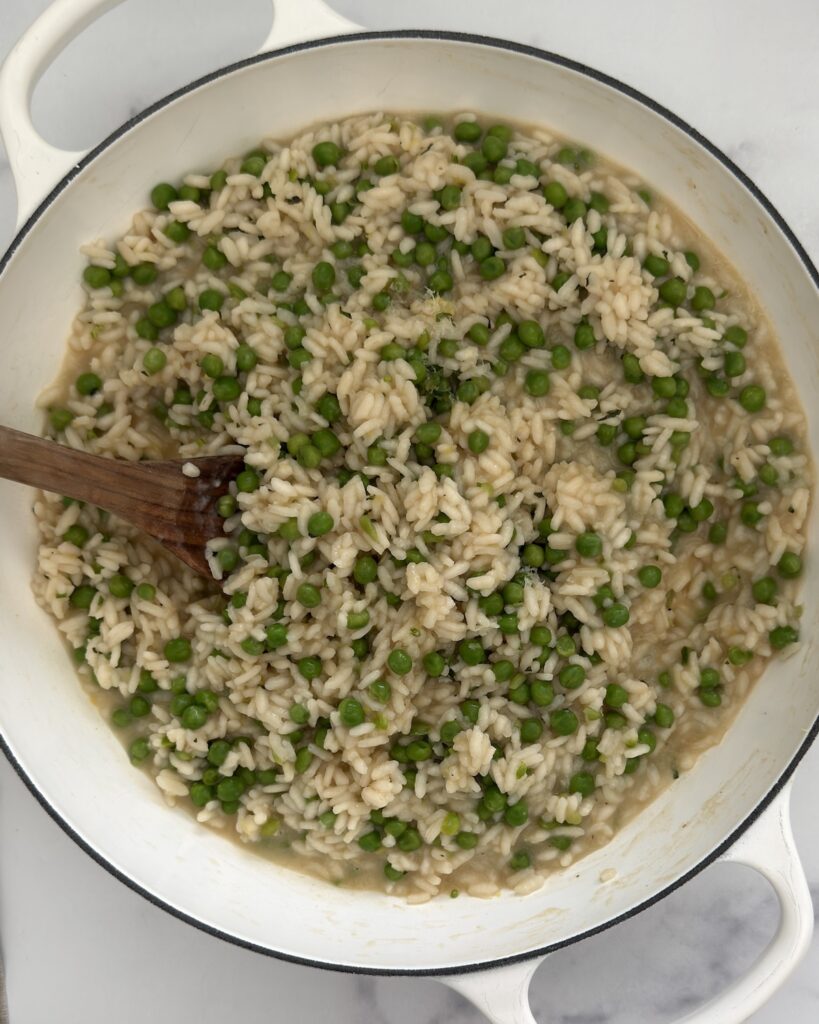
During cooking, stirring releases the rices’s natural starches, creating a creamy, decadent texture. Risotto should be slightly loose and silky — not dry or stiff.
Jenn’s Tip: Stir the risotto frequently as it cooks so the rice releases its natural starches and becomes creamy. Once the rice is tender, remove from the heat and vigorously stir in the butter and Parmesan cheese for a creamy finish.
Ingredients
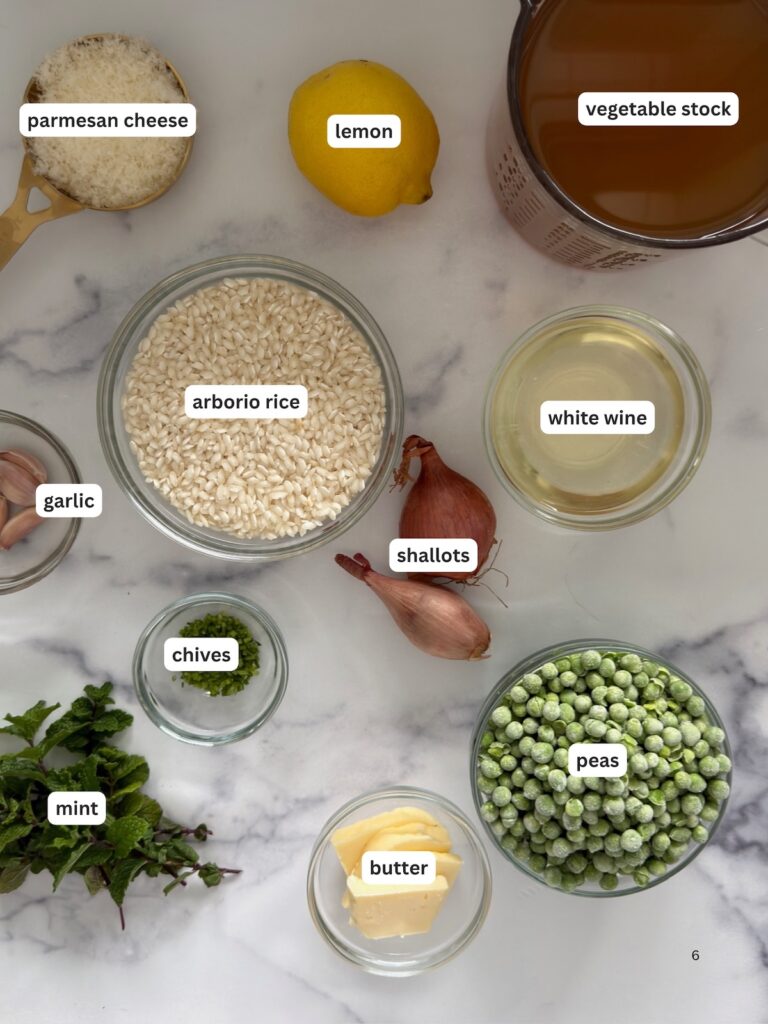
- Arborio Rice: High in starch, this rice gives risotto its signature creamy texture. It’s an essential ingredient for the dish.
- Vegetable Stock: Either store-bought or homemade works well, the key is to add this gradually, by the ladleful. Don’t rush the process.
- Peas: Sweet in taste and a pop of color to give this dish an earthy, fresh flavor.
- Shallot & Garlic: Aromatics to flavor the risotto.
- White Wine: Tangy and bright, use something dry and acidic to balance out the richness from the cheese and butter.
- Butter: Use unsalted to control how salty the dish is.
- Olive oil: Use extra virgin olive oil to sauté the shallot and garlic and build the flavorful base of the risotto.
- Parmesan Cheese: Sharp and nutty, freshly grate your own.
- Chives: A subtle onion flavor and nice added color.
- Mint: The perfect fresh herb to pair beautifully with peas.
- Lemon Zest: For brightness.
- Salt & Pepper: Seasoning is always essential.
Substitutions
- Arborio rice is essential for the signature creamy texture. If you can’t find arborio, other high-starch rices like Carnaroli or Vialone Nano would work.
- Frozen peas work beautifully and are convenient. Fresh are lovely if you have them, but not a must.
- Substitute wine with extra broth if you’d like to skip the alcohol all together. Add a splash of lemon juice for extra brightness and depth of flavor, too.
- Pecorino Romano can replace Parmesan for sharper, tangier flavor.
How To Make Pea Risotto
- In a small saucepan, bring the vegetable stock to a gentle simmer and keep warm over low heat.
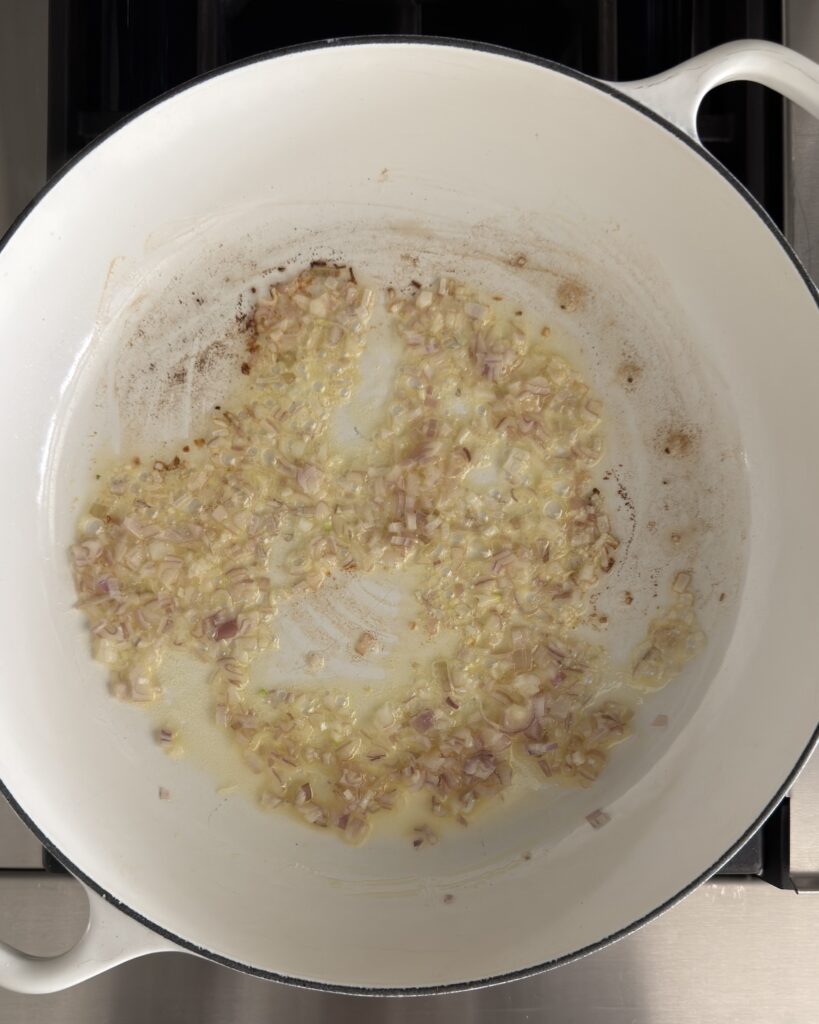
- In a wide heavy-bottomed pan or Dutch oven, heat the olive oil and 2 Tablespoons of the butter over medium heat. Add the shallot and cook for about 2 minutes until soft and translucent. Stir in the garlic and cook for about 30 seconds.
- Add the Arborio rice and stir constantly for about 2 minutes, until the grains are well coated and the edges begin to turn slightly translucent.
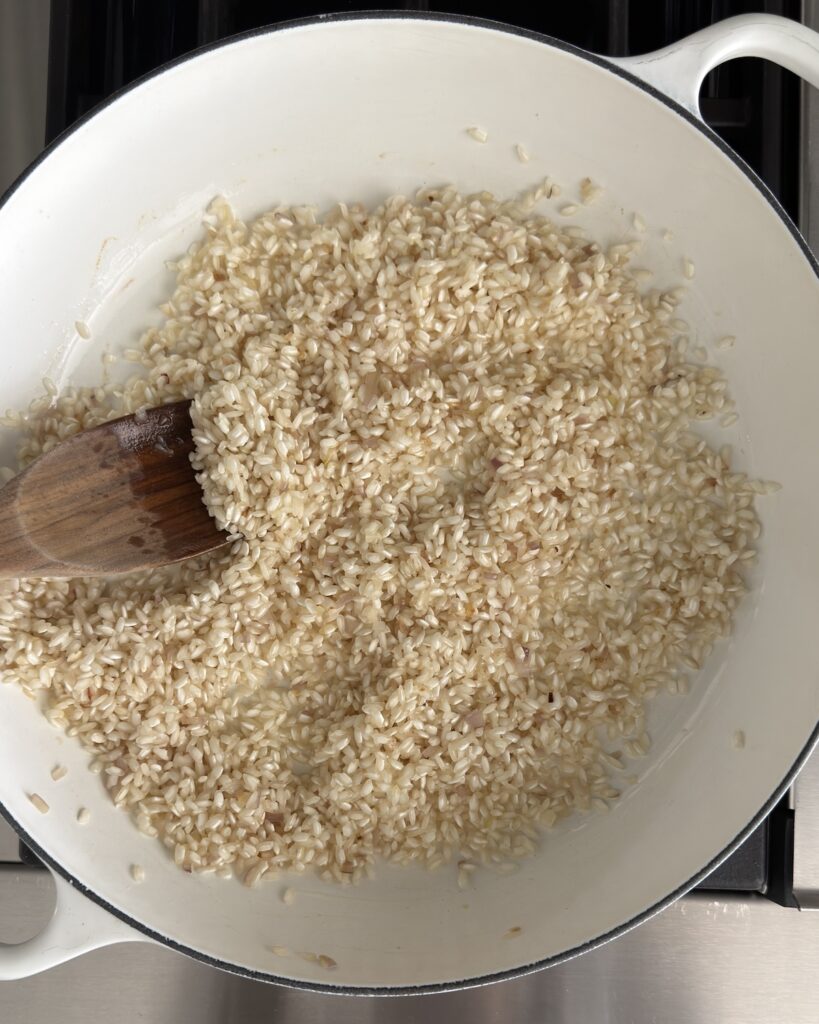
- Pour in the white wine and cook, stirring, until it is fully absorbed.
- Add one ladle of warm stock and stir frequently until the liquid is absorbed. Continue adding stock one ladle at a time, stirring often and seasoning lightly with salt as you cook.
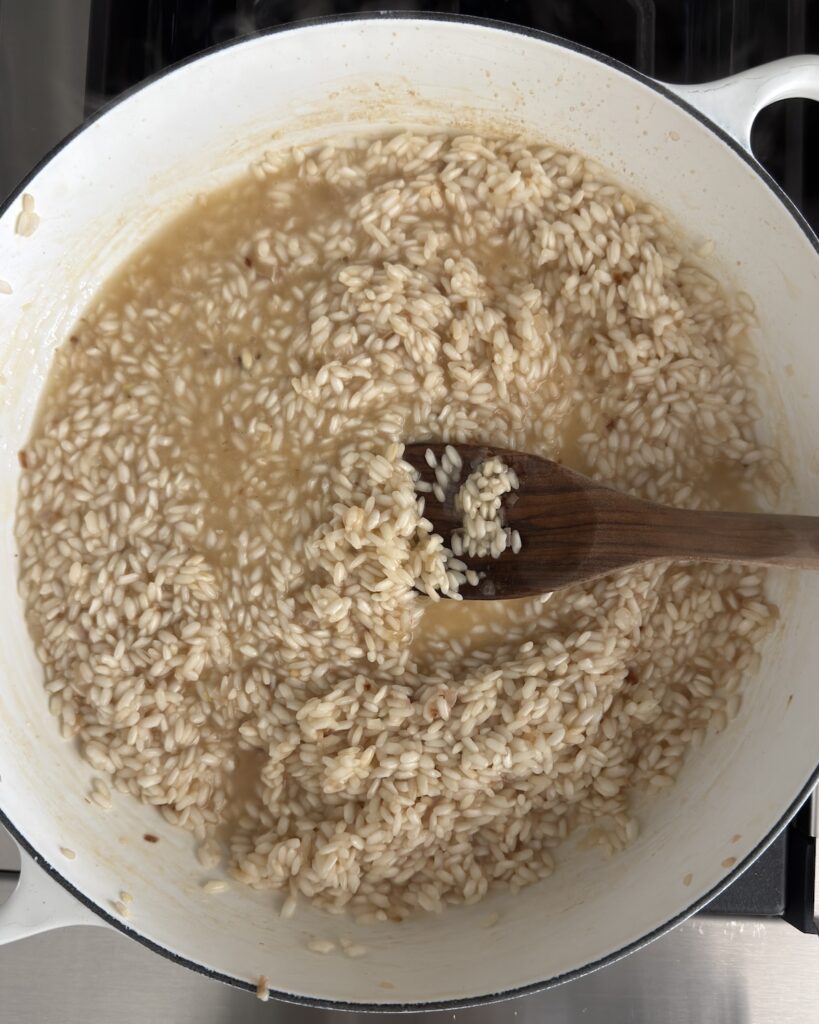
- After about 20 minutes, begin tasting the rice. It should be tender but still slightly firm in the center.
- Stir in the frozen peas and another small ladle of stock if needed. Cook for 2 to 3 minutes more until the peas are heated through and the risotto is creamy.
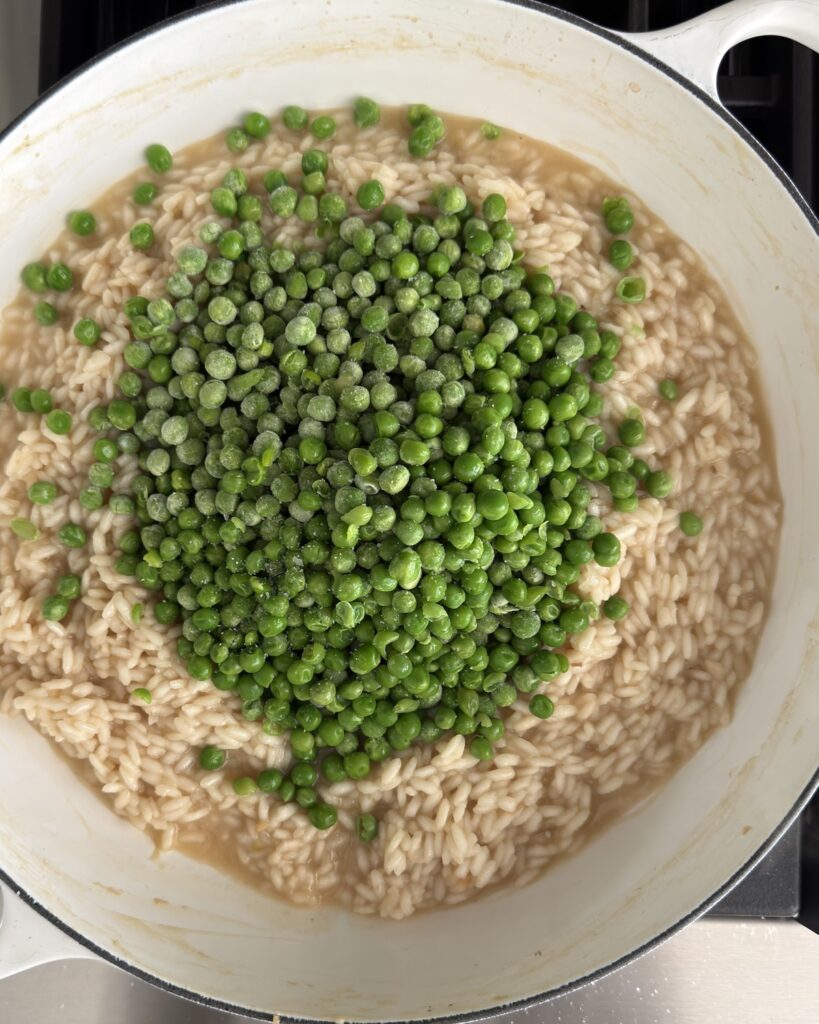
- Remove from heat. Stir in the remaining 3 Tablespoons butter, the Parmesan cheese, mint, 1 Tablespoon of the chives, and the lemon zest. Taste and adjust seasoning with salt and pepper.
- If the risotto becomes too thick, stir in a small splash of warm stock until it reaches a creamy consistency.
- Spoon into bowls, garnish with the remaining chives, and serve immediately.
Expert Tips
- Keep broth warm. Keep it at a low simmer so it’s warm each time it’s added. This will ensure the rice cooks properly and evenly, so the risotto has the right texture. Adding cold broth can shock the rice, preventing it from releasing all of that beautiful starch.
- Stir frequently but gently. This will help to release the starch for that creamy texture, while maintaining the integrity of the grains. Stirring too aggressively could break them.
- Do not rush the cooking process. This is key. Risotto is a labor of love that’s worth every minute. Slowly add the liquid one ladle at a time, and wait until it’s mostly absorbed before adding more. This is essential for creating that luscious, silky texture.
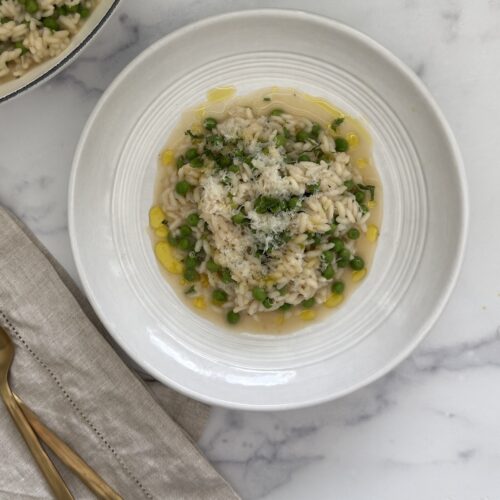
- Risotto should flow slowly when plated. The end result should be creamy and thick, but slightly loose. You don’t want a heavy, dense serving of risotto.
- Serve immediately for best texture. Risotto is best served hot and fresh, straight from the stove, when it’s the creamiest and silkiest.
Storage
If you have leftovers, store them in the fridge for up to 3 days in airtight container. Reheat gently with a splash of broth or water to loosen slightly. Risotto thickens as it sits, so it will need it to bring it back to a smooth, creamy consistency.
We don’t recommend freezing risotto, as thawing will change the texture.
Variations
- Add crispy pancetta. Salty and crunchy, this would be a delicious addition.
- Stir in mascarpone for extra creaminess. To make it next-level indulgent.
- Add asparagus pieces. For even more spring freshness and flavor. Simply saute or blanch, then stir in at the end of cooking.
- Make vegan by skipping cheese and butter. Omit either or both, if preferred.
Frequently Asked Questions
No, using Arborio or similar high starch, short-grain rice is really essential when making risotto for the creamy texture and consistency.
It’s possible you added too much liquid to the risotto, or you may have overcooked the risotto. When this happens, the grains start to break down, leading to a sticky, mushy texture.
No, definitely not. The starch is essential for creaminess.
We recommend making risotto fresh and serving immediately for the best texture and flavor, but you can partially cook it and and finish it later, if needed. Cook the rice per the instructions, until just under al dente, and then finish later.
More Decadent Italian Recipes
Pea Risotto
Equipment
- medium saucepan
- large skillet
- microplane or fine grater for Parmesean and lemon zest
Ingredients
- 1 ½ cups Arborio rice
- 6 cups warm vegetable stock plus more as needed
- 1 cup frozen peas
- 1 shallot finely minced
- 1 garlic clove minced
- ½ cup dry white wine
- 1 tablespoon olive oil
- 5 tablespoons unsalted butter divided
- 3/4 cup freshly grated Parmesan cheese
- 2 tablespoons finely chopped fresh chives divided
- 1 ½ teaspoons finely chopped fresh mint
- 1 teaspoon lemon zest
- kosher salt to taste
- freshly ground black pepper to taste
Instructions
- In a small saucepan, bring the vegetable stock to a gentle simmer and keep warm over low heat.
- In a wide heavy-bottomed pan or Dutch oven, heat the olive oil and 2 Tablespoons of the butter over medium heat. Add the shallot and cook for about 2 minutes until soft and translucent. Stir in the garlic and cook for about 30 seconds.
- Add the Arborio rice and stir constantly for about 2 minutes, until the grains are well coated and the edges begin to turn slightly translucent.
- Pour in the white wine and cook, stirring, until it is fully absorbed.
- Add one ladle of warm stock and stir frequently until the liquid is absorbed. Continue adding stock one ladle at a time, stirring often and seasoning lightly with salt as you cook.
- After about 20 minutes, begin tasting the rice. It should be tender but still slightly firm in the center.
- Stir in the frozen peas and another small ladle of stock if needed. Cook for 2 to 3 minutes more until the peas are heated through and the risotto is creamy.
- Remove from heat. Stir in the remaining 3 Tablespoons butter, the Parmesan cheese, mint, 1 Tablespoon of the chives, and the lemon zest. Taste and adjust seasoning with salt and pepper.
- If the risotto becomes too thick, stir in a small splash of warm stock until it reaches a creamy consistency.
- Spoon into bowls, garnish with the remaining chives, and serve immediately.
Notes
- If you have leftovers, store them in the fridge for up to 3 days in an airtight container. Reheat gently with a splash of broth or water to loosen slightly. Risotto thickens as it sits, so you will need to bring it back to a smooth, creamy consistency.
- We don’t recommend freezing, as thawing will change the texture.
- Keep broth warm. Keep it at a low simmer so it’s warm each time it’s added. This will ensure the rice cooks properly and evenly, so the risotto has the right texture. Adding cold broth can shock the rice, preventing it from releasing all of that beautiful starch.
- Stir frequently but gently. This will help to release the starch for that creamy texture, while maintaining the integrity of the grains. Stirring too aggressively could break them.
- Do not rush the cooking process. This is key. Risotto is a labor of love that’s worth every minute. Slowly add the liquid one ladle at a time, and wait until it’s mostly absorbed before adding more. This is essential for creating that luscious, silky texture.
- Risotto should flow slowly when plated. The end result should be creamy and thick, but slightly loose. You don’t want a heavy, dense serving of risotto.
- Serve immediately for the best texture. Risotto is best served hot and fresh, straight from the stove, when it’s the creamiest and silkiest.