Seafood Linguine
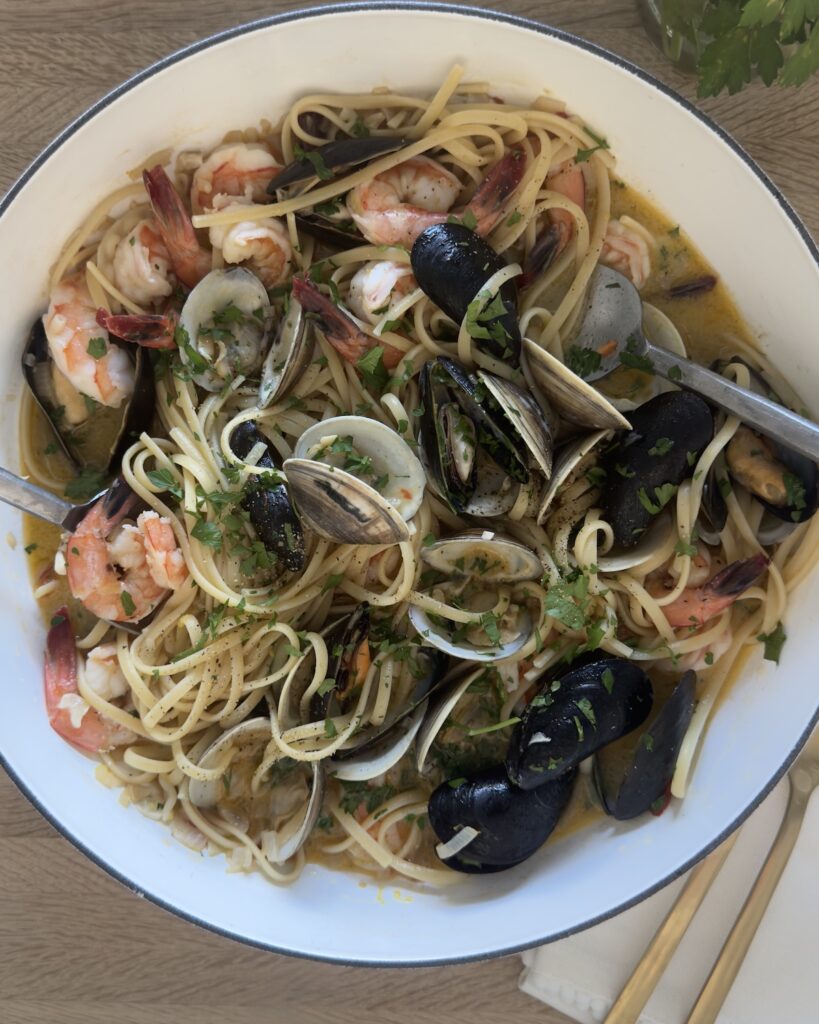
This Seafood Linguine is a restaurant-quality pasta recipe made easy right at home using just a single skillet. Inspired by a pasta I had on the Amalfi Coast, it’s a classic creamy white wine pasta sauce with no heavy cream added!
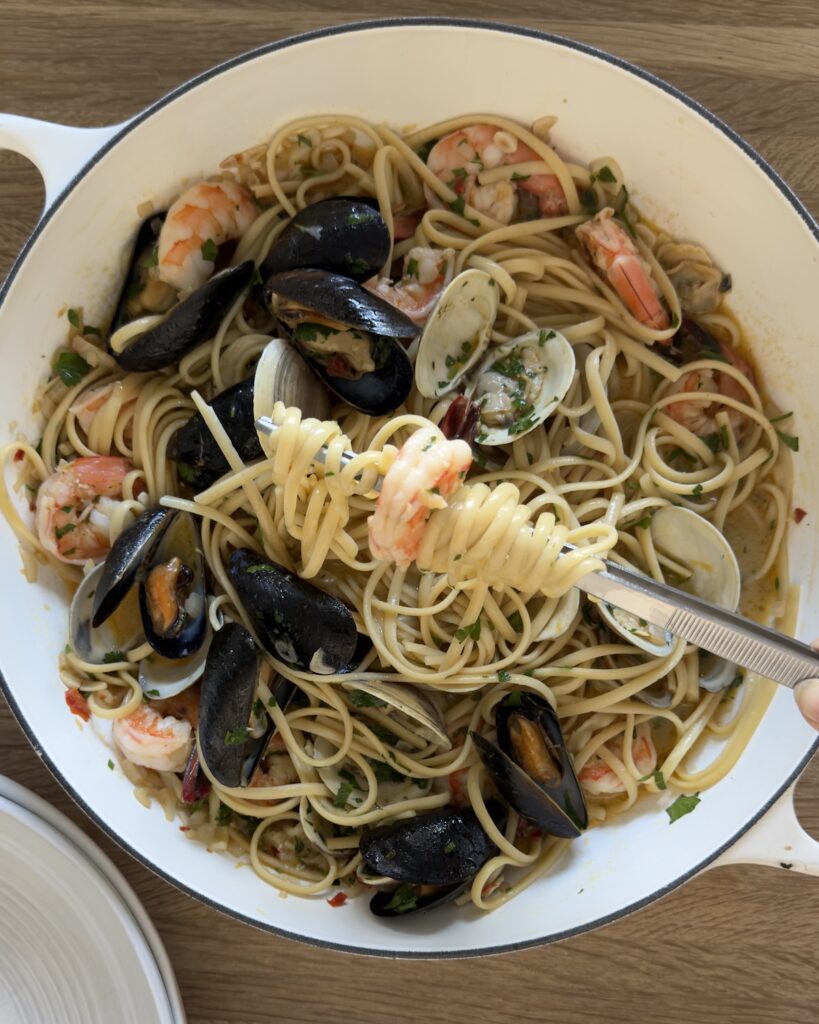
If you’ve ever had Seafood Linguine in Italy, you know it’s just insanely delicious. I first had this dish in the Amalfi Coast and it’s one meal that always stands out in my mind. With shrimp, clams, and mussels, every bite is bursting with fresh seafood all coated in a light yet creamy white wine sauce.
When I developed this pasta recipe at home, I tested it numerous ways to get it just right. I wanted to make sure I could make the sauce a creamy texture without using heavy cream (reserved starchy pasta water is the key!). Additionally, cooking the seafood in the correct order is essential to make sure it’s cooked perfectly and not rubbery in texture.
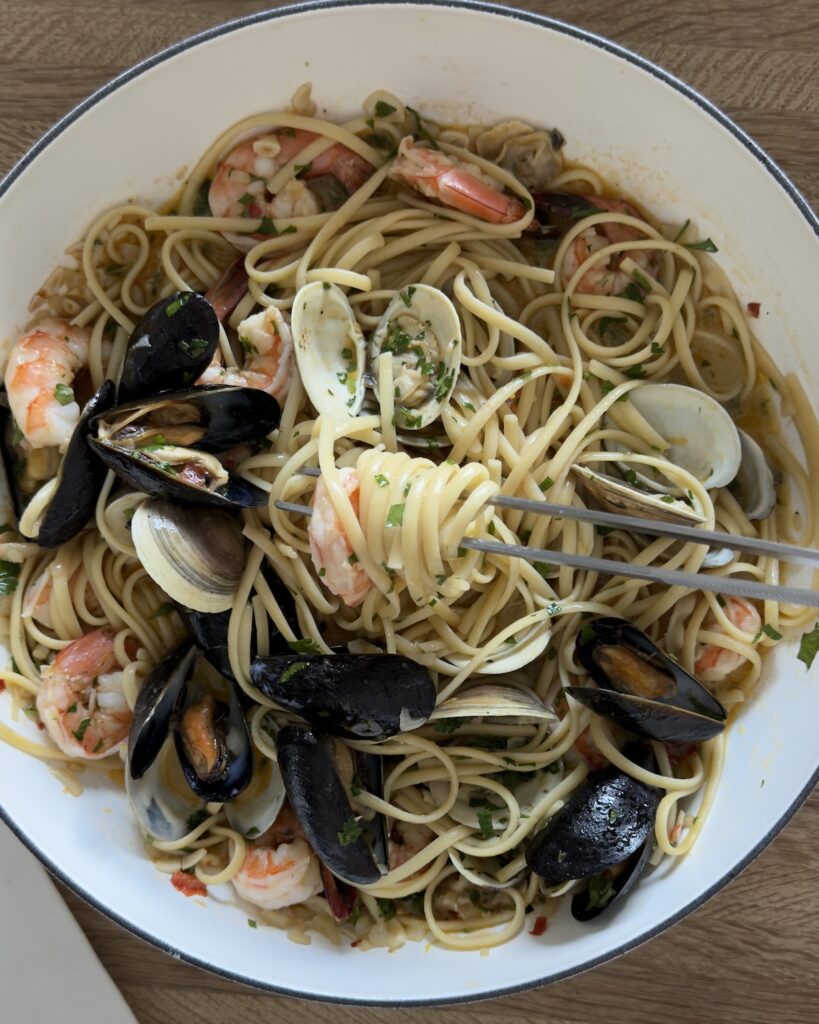
Now this has become one of our favorite holiday as well as summer entertaining dishes to feed a crowd. If you love a great pasta with seafood, our Lemon Garlic Shrimp Pasta or viral Lobster Pasta are two other great choices.
Table of Contents
Why You’ll Love this Recipe
- Decadent restaurant-quality pasta at home. You don’t need to go to a restaurant to make a great seafood linguine, it’s so easy (and more affordable!) to make it right in your own kitchen.
- Minimal equipment is required. All you need is a pot to boil the noodles and a large skillet to assemble the sauce. Clean up is quick in about 5 minutes, which is why I love to entertain with this recipe.
- Customize it to your desire. You can add other types of seafood, like scallops or even chunks of fish, but I like to stick to mussels, clams, and shrimp.
Jenn’s Tip: Use the freshest seafood you can find and buy it from a trusted fish market or counter. The mussels and clams should be tightly closed and smell like the sea, not fishy.
When it comes to cleaning clams, you want to soak them in salted water. Add 1½ tablespoons kosher salt per quart of water. Place the clams into the water for 20 to 30 minutes to help them release any sand so your sauce stays smooth and grit-free.
Ingredients
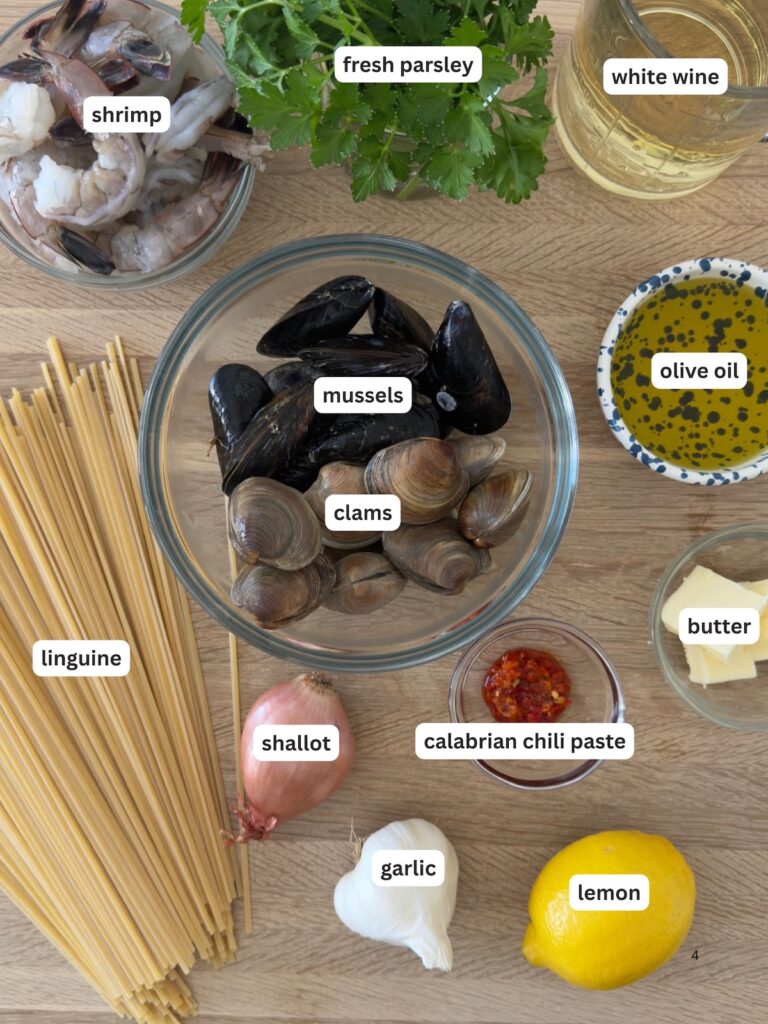
- Linguine: The noodles that will be coated in the sauce.
- Mussels: Affordable and rich in flavor. Be sure to remove the beards prior to cooking.
- Small clams: I like to use littlenecks, make sure you scrub them well and follow my salt bath instructions to remove the sandy grit!
- Large shrimp: Buy them already peeled and deveined for ease. You can keep the tails on or remove them.
- Extra-virgin olive oil: Cooking fat for the recipe.
- Garlic cloves: Thinly slice these to infuse the sauce with the rich garlic flavor.
- Shallot: A light and sweet onion flavor that adds a richness to every bite.
- Calabrian chili paste or pinch of crushed red pepper flakes: Adds nice heat, a little bit goes a long way, or you can omit if you prefer a mild dish.
- Dry white wine: I love to add this into the sauce, it adds great depth of flavor.
- Reserved pasta cooking water: The key to success with making a luscious sauce. You will scoop this out of the pasta pot right before you drain the pasta.
- Lemon: Adds bright and fresh citrus flavor, we will use the zest as well as the juice.
- Unsalted butter: Rounds out all of the flavors for the sauce and makes it silky in texture.
- Fresh Italian parsley: Gives fresh herb flavor at the end.
How to Make Seafood Linguine
- Place the clams in a large bowl and cover with cold water. Add 1 teaspoon of salt and let the clams sit for 20 to 30 minutes so they can release any sand. Lift the clams out of the water into a clean bowl and rinse them briefly under cold water.
- Rinse the mussels under cold water, scrubbing off any debris. Remove the beards by pulling firmly toward the hinge. Discard any mussels or clams that are cracked or that stay open when tapped.
- Bring a large pot of salted water to a boil. Add the linguine and cook until just shy of al dente according to package directions. Before draining, scoop out 1 to 1½ cups of the starchy pasta water and set aside. Drain the pasta.
- While the pasta cooks, pat the shrimp dry with paper towels and season lightly with salt and pepper.
- In a wide sauté pan or shallow Dutch oven, heat the olive oil over medium heat. Add the sliced garlic and minced shallot and cook for 1 to 2 minutes, stirring often, until softened and fragrant but not browned.
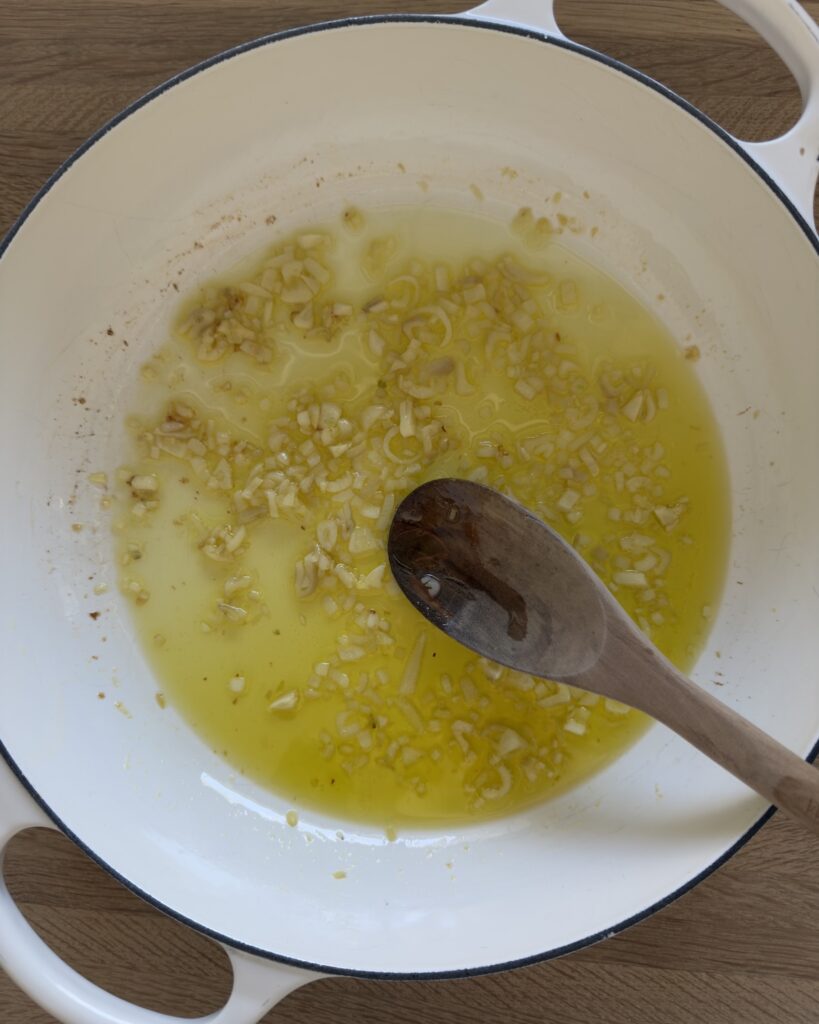
- Add the Calabrian chili paste or crushed red pepper, if using, and cook for 20 to 30 seconds to bloom the flavors in the oil.
- Pour in the white wine and let it simmer, uncovered, for 3 to 4 minutes, until reduced by about half. This helps create a thicker base for the sauce.
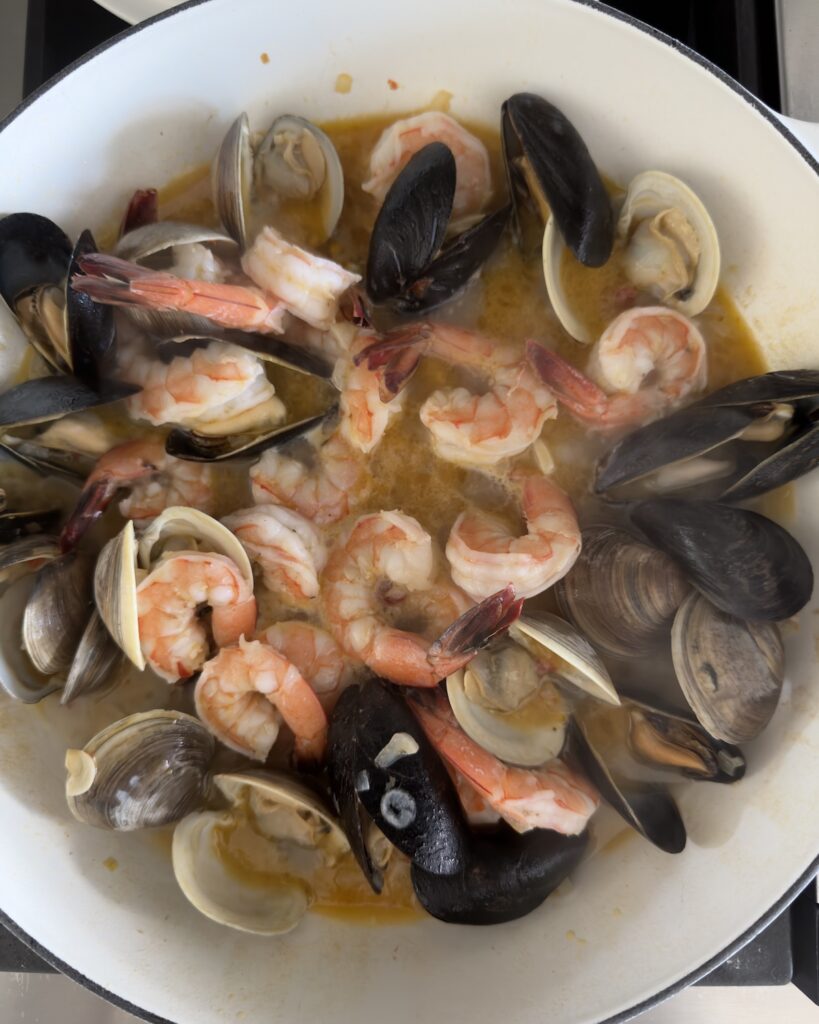
- Add the mussels and clams to the reduced wine mixture. Cover the pan and cook over medium-high heat for 4 to 6 minutes, gently shaking the pan occasionally, until most of the shells have opened. Discard any that stay closed.
- Add the shrimp to the pan, nestling them into the liquid. Cover again and cook for 2 to 3 minutes, just until the shrimp are pink and opaque.
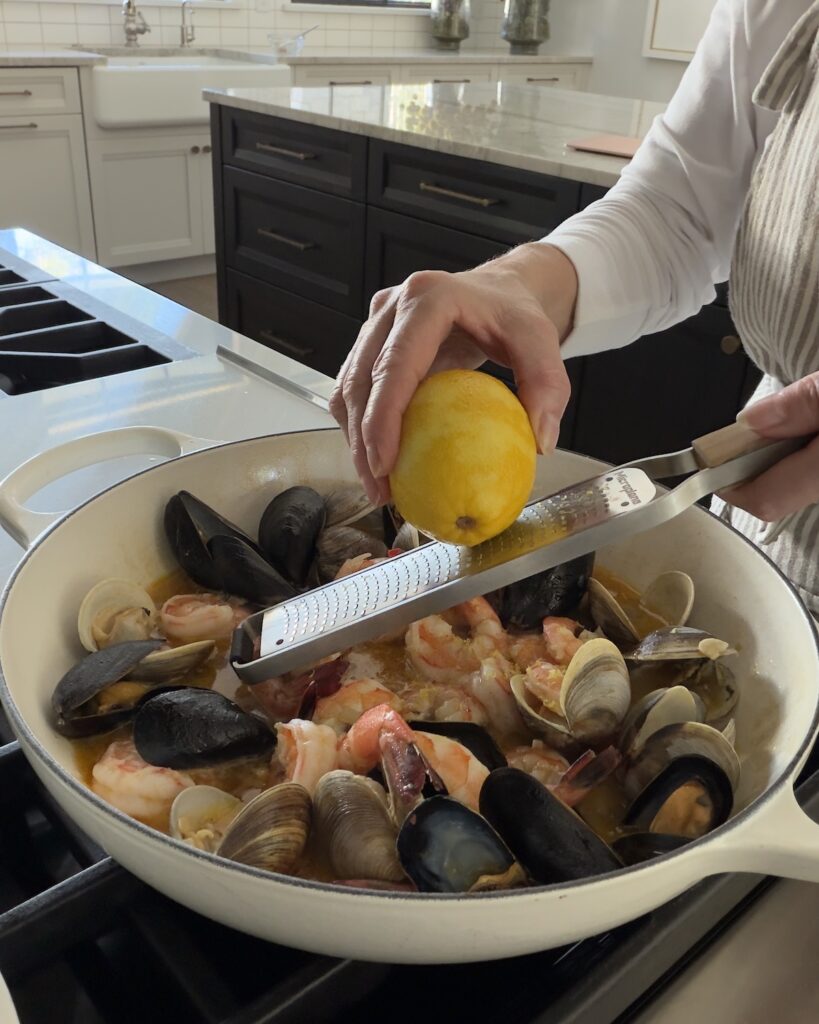
- Add the lemon zest and about ½ cup of the reserved pasta water to the pan and gently stir.
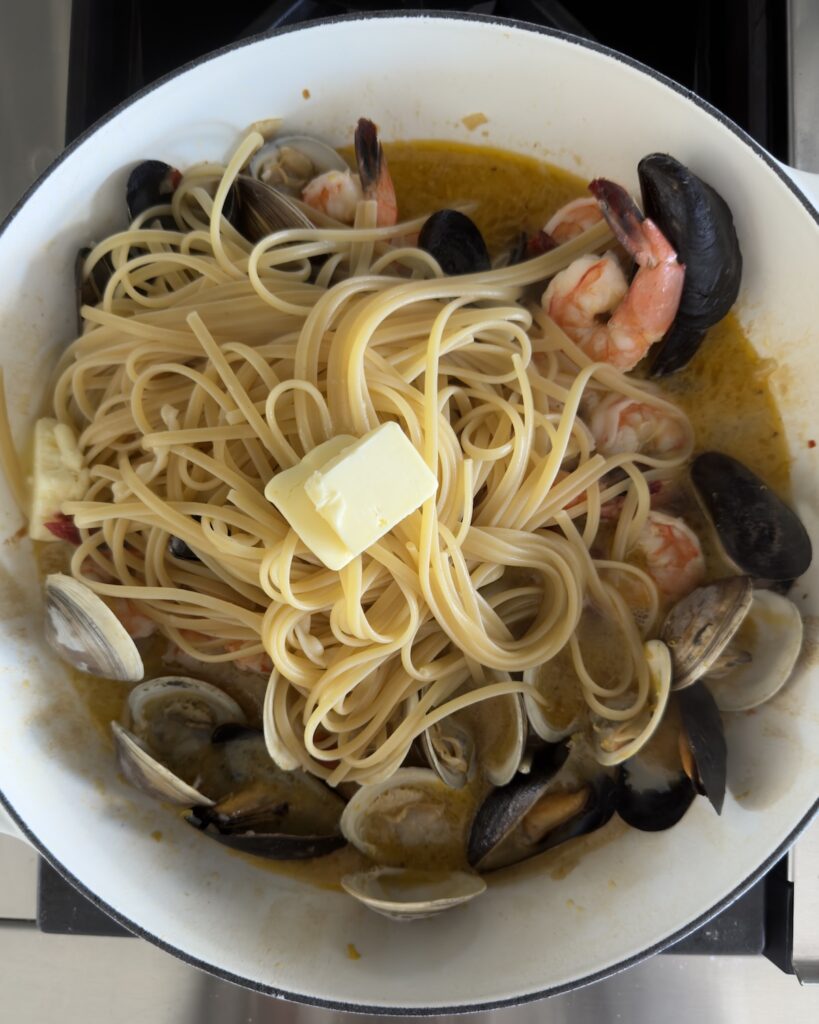
- Add the drained linguine to the pan with the seafood. Turn the heat to low and toss gently for 1 to 3 minutes, adding more pasta water a little at a time until the sauce becomes silky, glossy, and clings to the pasta instead of pooling at the bottom of the pan. Add 2-3 tablespoons of butter and toss until melted and fully incorporated.
- Turn off the heat. Add the lemon juice and chopped parsley, and toss again. Taste and adjust with more salt and black pepper as needed.
- Divide the pasta and seafood into bowls and serve immediately.
Expert Tips
- With the shrimp tails, you can leave the tails on for a prettier, restaurant-style presentation as well as a bit more flavor. Or if desired, you can remove them before cooking for easier eating.
- Seafood cooks very quickly, so make sure to set a timer and don’t overcook. Clams and mussels are done as soon as they open, and the shrimp should be just pink and opaque (about 3 minutes). Watch carefully or the texture could turn rubbery.
- Reserve the starchy pasta cooking water before draining, and add it slowly as you toss the pasta with the sauce. You want a silky sauce that clings to the linguine, not a watery sauce. If you don’t use all the reserved pasta water that’s totally ok!
- Wait to adjust the salt until the end. As the wine reduces and the seafood releases its juices, the sauce becomes more concentrated, so it’s easy to over-salt if you season too early.
- If you want to use frozen seafood, just be sure you thaw it overnight in the fridge completely before cooking.
Storage
Seafood linguine is best eaten right after it’s made for the best texture on the cooked seafood. You can store it for up to 1 day in the fridge and reheat it gently on the stovetop until warmed through. Add a splash of water to loosen the sauce if needed.
We don’t recommend freezing the pasta as it will change the texture of the seafood as well as the noodles and cause them to be mushy.
FAQs
It’s from the coastal region of Italy, specifically Genoa in Liguria. Linguine means “little tongue” and it bunds to seafood perfectly.
You could make linguine alle vongole which is just with clams or you could make the sauce with pesto for a bright herbal twist. Feel free to add some tomatoes as well if you like that flavor with your seafood.
You will cook the seafood in batches since each type has a different cook time. Remove it to a plate and then combine it all back together with the cooked pasta just to warm through.
We also love a tomato sauce, Alfredo-style sauce, pesto-based sauce, or just lemon and olive oil.
More Delicious Pasta Recipes
Seafood Linguine
Equipment
- Large pot (for boiling pasta)
- Wide sauté pan or shallow Dutch oven
Ingredients
- 12 ounces linguine
- 12 mussels scrubbed and debearded
- 12 small clams such as littlenecks, scrubbed
- 12 ounces large shrimp peeled and deveined (tails on or off)
- 5 Tablespoons extra virgin olive oil plus more for finishing
- 3 to 4 large garlic cloves thinly sliced
- 1 shallot finely minced
- 1 teaspoon Calabrian chili paste or pinch of crushed red pepper flakes optional, but recommended
- 1¼ cups dry white wine
- 1 to 1½ cups reserved pasta cooking water
- 1 lemon, zested
- 2-3 Tablespoons freshly squeezed lemon juice to taste
- 1 to 2 Tablespoons unsalted butter
- ¼ cup chopped fresh Italian parsley
- Kosher salt
- Freshly ground black pepper
Instructions
- Place the clams in a large bowl and cover with cold water. Add 1 teaspoon of salt and let the clams sit for 20 to 30 minutes so they can release any sand. Lift the clams out of the water and into a clean bowl, and rinse briefly under cold water. Do not pour the sandy water over them.
- Rinse the mussels under cold water, scrubbing off any debris. Remove the beards by pulling firmly toward the hinge. Discard any mussels or clams that are cracked or that stay open when tapped.
- Bring a large pot of salted water to a boil. Add the linguine and cook until just shy of al dente according to package directions. Before draining, scoop out 1 to 1½ cups of the starchy pasta water and set aside. Drain the pasta.
- While the pasta cooks, pat the shrimp dry with paper towels and season lightly with salt and pepper.
- In a wide sauté pan or shallow Dutch oven, heat the olive oil over medium heat. Add the sliced garlic and minced shallot and cook for 1 to 2 minutes, stirring often, until softened and fragrant but not browned.
- Add the Calabrian chili paste or crushed red pepper, if using, and cook for 20 to 30 seconds to bloom the flavors in the oil.
- Pour in the white wine and let it simmer, uncovered, for 3 to 4 minutes, until reduced by about half. This helps create a thicker base for the sauce.
- Add the mussels and clams to the reduced wine mixture. Cover the pan and cook over medium-high heat for 4 to 6 minutes, gently shaking the pan occasionally, until most of the shells have opened. Discard any that stay closed.
- Add the shrimp to the pan, nestling them into the liquid. Cover again and cook for 2 to 3 minutes, just until the shrimp are pink and opaque.
- Add the lemon zest and about ½ cup of the reserved pasta water to the pan and gently stir.
- Add the drained linguine to the pan with the seafood. Turn the heat to low and toss gently for 1 to 3 minutes, adding more pasta water a little at a time until the sauce becomes silky, glossy, and clings to the pasta instead of pooling at the bottom of the pan. Add 2 to 3 Tablespoons of butter and toss until melted and fully incorporated.
- Turn off the heat. Add the lemon juice and chopped parsley, and toss again. Taste and adjust with more salt and black pepper as needed.
- Divide the pasta and seafood into bowls and serve immediately.
Notes
- With the shrimp tails, you can leave the tails on for a prettier, restaurant-style presentation as well as a bit more flavor. Or if desired, you can remove them before cooking for easier eating.
- Seafood cooks very quickly, so make sure to set a timer and don’t overcook. Clams and mussels are done as soon as they open, and the shrimp should be just pink and opaque, or they will become rubbery.
- Reserve the starchy pasta cooking water before draining, and add it slowly as you toss the pasta with the sauce. You want a silky sauce that clings to the linguine, not a watery sauce. If you don’t use all the reserved pasta water that’s totally ok!
- Wait to adjust the salt until the end. As the wine reduces and the seafood releases its juices, the sauce becomes more concentrated, so it’s easy to over-salt if you season too early.
- If you want to use frozen seafood, just be sure you thaw it overnight in the fridge completely before cooking.